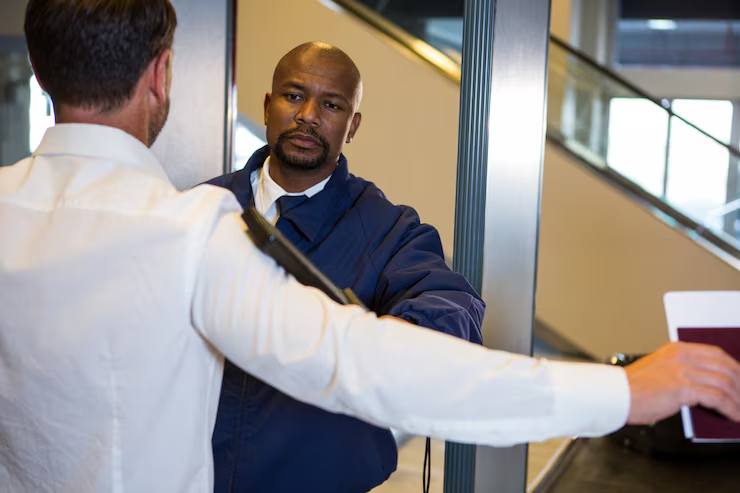
Emergency Response Planning Behind Professional Event Security Services
There was a time when event security mostly meant putting a few guards near the entrances and hoping nothing particularly unusual happened during the day. If someone caused a disturbance, security handled it. If a gate became overcrowded, somebody redirected foot traffic. The approach was fairly reactive, honestly. Most planning focused on what was likely to happen rather than preparing for every scenario that could potentially unfold once hundreds or thousands of people gathered in the same place.
That mindset started to change as events grew larger, more complex, and increasingly dependent on professional event security services to keep operations running smoothly behind the scenes. Concerts, festivals, corporate gatherings, sporting events, and community celebrations all create their own set of challenges. What most attendees never see, though, is how much emergency response planning happens long before the first guest even arrives. The visible security presence is only one piece of a much larger system working in the background.
Part of that planning often involves determining whether armed security guard services are necessary for the specific event environment. Not every venue requires that level of protection, obviously, but some situations call for additional preparedness based on crowd size, location, VIP attendance, or potential risk factors. The decision itself usually comes after a detailed assessment rather than a one-size-fits-all approach. Security planning tends to work best when it matches the actual needs of the event instead of relying on assumptions.
Why Preparation Starts Weeks Before The Event
A lot of people imagine security planning happening a day or two before the event begins. In reality, some of the most important decisions happen weeks in advance.
Security teams typically start by studying the venue itself. Entry points, exits, parking areas, nearby roads, emergency vehicle access routes, crowd flow patterns, and even nearby businesses all become part of the conversation. What looks like a simple event space to attendees often reveals dozens of potential variables once planners start evaluating it from a safety perspective.
Weather gets factored in, too.
Outdoor events especially create challenges that can change quickly depending on conditions. A venue that works perfectly on a clear afternoon may require an entirely different response strategy when heavy rain, high temperatures, or strong winds come into play. Good planning accounts for those possibilities before they become problems.
Communication Usually Determines How Well Things Go
Interestingly, emergency response plans are often less about the emergency itself and more about communication.
Most incidents become harder to manage when information moves slowly. Security personnel need to know who makes decisions, who contacts emergency services, who communicates with venue management, and how updates get shared across the team. Those details sound simple on paper, but they become extremely important once a situation begins to develop in real time.
The strongest security teams spend a surprising amount of effort creating communication protocols that people hopefully never need to use.
Because when something does happen, there is usually very little time available to figure things out on the spot.
Crowd Behavior Can Shift Faster Than People Expect
One thing event planners learn pretty quickly is that crowds rarely behave exactly as predicted.
Most gatherings remain safe and orderly from start to finish. Occasionally, though, conditions change faster than expected. A delayed performance, a medical emergency, an unexpected weather alert, or even a temporary bottleneck near an entrance can alter crowd movement in ways that require immediate adjustments.
This is why emergency response plans often include multiple contingency options rather than a single solution.
A crowd leaving through one exit may need to be redirected.
Medical personnel may need faster access through a restricted area.
Certain sections of a venue may need to be temporarily closed.
The plan itself stays flexible because the environment remains constantly changing.
Technology Started Playing A Larger Role
Security planning has become much more sophisticated over the last several years, partly because technology provides information that simply was not available before.
Mobile reporting systems allow supervisors to monitor activity throughout an event without physically standing in every location at once. Real-time dashboards help track incidents as they occur. Surveillance systems improve visibility across larger venues. In some situations, drone-assisted monitoring can provide a broader view of crowd movement patterns that ground personnel may not immediately notice.
The technology matters, obviously.
But honestly, it works best when combined with experienced security professionals who know how to interpret what they are seeing. Tools provide information. People still make the decisions.
The Best Plans Are Often The Ones Nobody Notices
Most attendees judge an event by whether they had a good experience.
They remember the music, the speakers, the food, or the entertainment.
They usually do not think about emergency response planning at all.
That is often a sign that the planning worked.
When entrances move smoothly, crowds stay manageable, communication remains organized, and incidents get addressed before they escalate, security becomes almost invisible to the average guest. The event simply feels well-managed from beginning to end.
That outcome rarely happens by accident. It usually comes from extensive preparation, experienced personnel, and response plans built long before the event starts.
Companies like Vigilant Eye Security understand that effective event protection extends far beyond placing guards around a venue. Operating throughout California and Arizona, the company combines experienced personnel, advanced technology, and detailed planning strategies to help clients prepare for situations most attendees never realize were considered in the first place. Which, honestly, is often what separates a smoothly run event from one that struggles when the unexpected eventually shows up.
Featured Image Source: https://img.magnific.com/free-photo/security-guard-frisking-passenger_107420-85132.jpg?semt=ais_hybrid&w=740&q=80